Screen Time for Kids (Part 3): How to Create Healthy Digital Habits at Home (Without Conflict)
In the first two articles, we explored why screen time affects children and what risks to watch for.
Now comes the most important part:
How to actually live with screens at home — calmly, consciously, and without daily battles.
This is not about banning devices.
This is about raising a child who knows how to use technology — not be controlled by it.
🎯 The Goal: Not “No Screens” — But Healthy Boundaries
According to the American Academy of Pediatrics, the focus should not be fear-based restrictions, but a family plan for intentional media use.
Think of it this way:
The goal is not less technology. The goal is better skills.
🧭 1. Start With a Simple Family Plan
Children feel safer when expectations are clear.
Create 3 simple agreements:
- Where screens are used (not at the table, not in bed)
- When (clear start and end times)
- Why (learning, creating, relaxing — not endless scrolling)
Say:
“We don’t ban screens — we learn how to use them.”
😴 2. Protect Sleep — Your Strongest Lever

If you change just one thing, make it this:
No screens at least 1 hour before bedtime.
Why it matters:
- improves mood and attention
- supports brain development
- reduces emotional reactivity
Simple routine:
light → calm → story → sleep
Devices stay outside the bedroom.
🧠 3. Don’t Give Your Child’s Attention to Algorithms
Not all screen time is equal.
❌ Passive consumption (scrolling, autoplay)
✅ Active engagement (creating, thinking, building)
Ask:
“Is my child consuming — or creating?”
🌱 Practical Activities That Build Real Skills
Use technology as a tool for development, not just entertainment.
💪 Self-Confidence & Emotional Intelligence
Activity: “My Day in a Video”
- Your child records a short video about their day
-
Then you watch it together and reflect:
- What went well?
- What felt difficult?
- What are you proud of?
Builds:
- self-awareness
- emotional vocabulary
- confidence
🎨 Creativity
Activity: “Create Your Own World”
- Use a drawing app or combine digital + physical play
-
Prompt:
“Design a world where everything works differently.”
Builds:
- imagination
- problem-solving
- creative thinking
🧠 Critical Thinking

Activity: “True or Not?”
- Watch a short video together
-
Ask:
- Is this fact or opinion?
- Who made this — and why?
- Is something trying to influence us?
This is the foundation of media literacy.
🗳️ Understanding Society & Decision-Making
Activity: “Family Voting Day”
- Create fun roles (e.g., “Weekend Planner”, “Dinner Chooser”)
- Each person presents ideas
- Vote together
Builds:
- decision-making
- communication
- understanding of social systems
💬 Social Awareness & Empathy
Activity: “What Are They Feeling?”
- Watch a short animation without sound
- Ask your child to guess emotions and create dialogue
Builds:
- empathy
- emotional recognition
- social understanding
🔬 Science & Curiosity
Explore: Quantum world for kids
Quantum mechanics is complex even for adults — so the best way to start is with child-friendly videos and visual explanations.
Recommended videos:
Activity: “The Micro World Under a Magnifier”
Take a magnifying glass (or use camera zoom) and explore:
- fabric
- paper
- skin
- sand or other tiny objects
👉 Notice:
- how many details appear
- how different the world looks up close
Ask your child:
“How would you feel if you were so tiny that this world was your jungle?”
Creative extension:
- draw this micro world
- design your “family home” inside it
-
tell or record a story:
- who lives there?
- how do they move?
- what does their world look like?
👉 Key idea:
“Even the tiniest world can be huge and full of adventure.”
👉 Builds:
- imagination
- curiosity
- perspective-taking
⚡ Movement & “Energy Release”
Screens shouldn’t replace movement — they can support it.
Activity:
- 5-minute guided movement video
- followed by 10 minutes of free physical play
Children need both:
- structure
- freedom
🙏 Gratitude Practice
Activity: “Thank You Video”
-
Your child records a short message:
- thanking a parent, friend, or teacher
Builds:
- positive mindset
- stronger relationships
🧘 Body Awareness & Calm
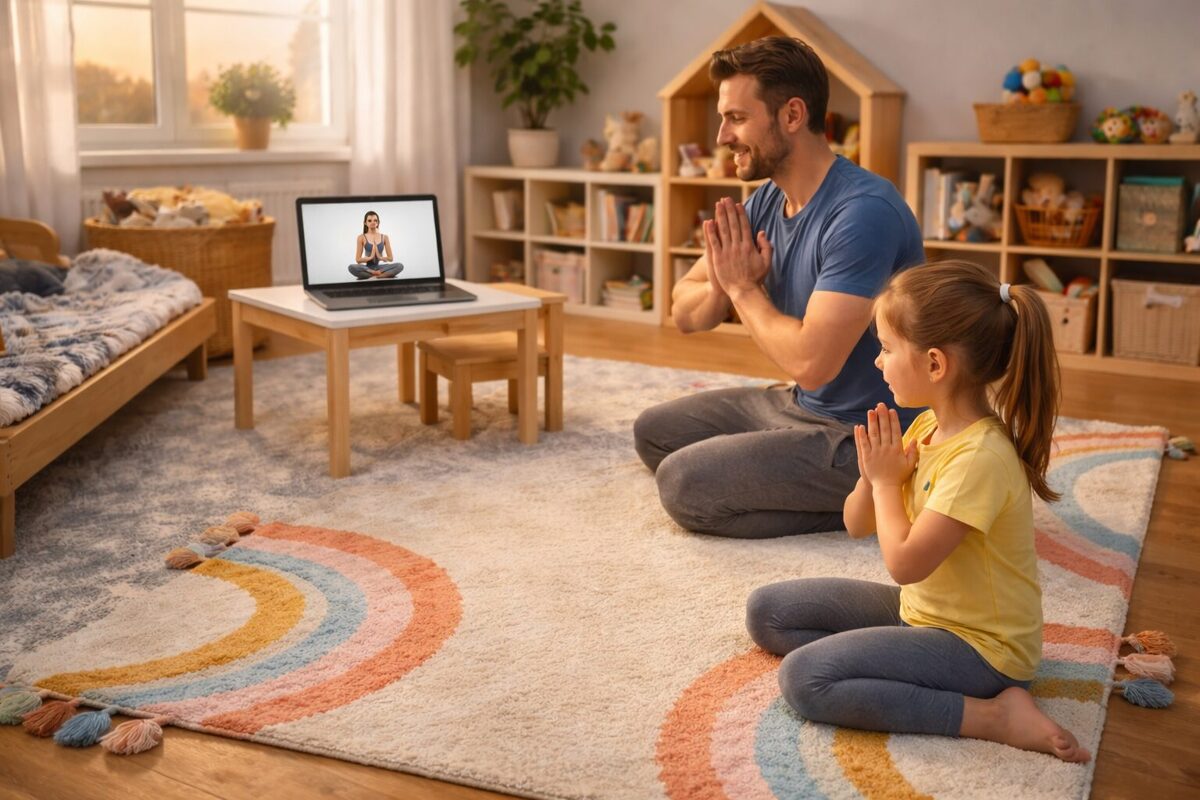
Activity: “Let’s Try It Too”
- Watch a kids’ yoga or movement video
- Then create your own movements together
Builds:
- body awareness
- self-regulation
- calmness
🧪 Weekly Reflection (Mini Self-Development Practice)
Ask once a week:
- What did you enjoy this week?
- What did you learn?
- What do you want to try next?
This matters more than any strict screen limit.
🤝 Friendship & Accepting Differences
Activity: “If I Were Them…”
- Choose characters from stories or videos
- Act out their perspective
Builds:
- empathy
- tolerance
- social flexibility
🏠 The Hidden Factor: Parents’ Example
There is a real concept called technoference — when technology interrupts human connection.
If a child sees:
- phones during meals
- divided attention
They learn:
“The screen is more important than people.”
💡 One Simple Family Rule
“When we are together — we are fully present.”
🌿 Rethinking Your Home Environment
Sometimes screen time isn’t the problem —
lack of engaging alternatives is.
Create small changes:
- a movement corner
- sensory play options
- simple creative setups
👉 Get inspired here:
- https://www.kidspace.store/shop/category/sensory-play--learning/
- https://www.kidspace.store/shop/category/climbing-sets--playhouses-1/
Even one small change can shift daily habits.
✨ Final Thought
Your child doesn’t need a perfect system.
They need:
- guidance
- boundaries
- connection
Technology can support development —
when we use it with intention.
💬 Questions to Reflect On
- When do screens support our family — and when do they disrupt it?
- Is my child creating or just consuming?
- What is my child learning from me — not the screen?
Author: Edda Borde, Master of Social Psychology